

Breaking Down to Breakthrough
Getting Dirty in My Inner Garden

When I was seventeen, I struggled with severe depression, suicidal ideations, attempted suicide, and was diagnosed with PTSD. That’s just a snapshot.
I could send myself into a tailspin within seconds. The darkness became so overwhelming that I eventually agreed to admit myself into a hospital for help. At the time, I believed things would only get worse. I couldn’t imagine a future filled with hope, peace, or joy. Looking back now, this was a period of my life that I’m surprised I survived. What I didn’t understand then was that I wasn’t at the end of my story.
I was standing in a garden that desperately needed tending.
Back then, I thought my breakdowns meant something was wrong with me. I did everything I could to avoid them. I wanted to outrun the sadness, distract myself from the pain, and pretend everything was okay. Eventually, life taught me something different.
A breakdown isn’t a bottom. It’s the turning of the soil before new growth can emerge and breakthrough to become a beautiful flower.
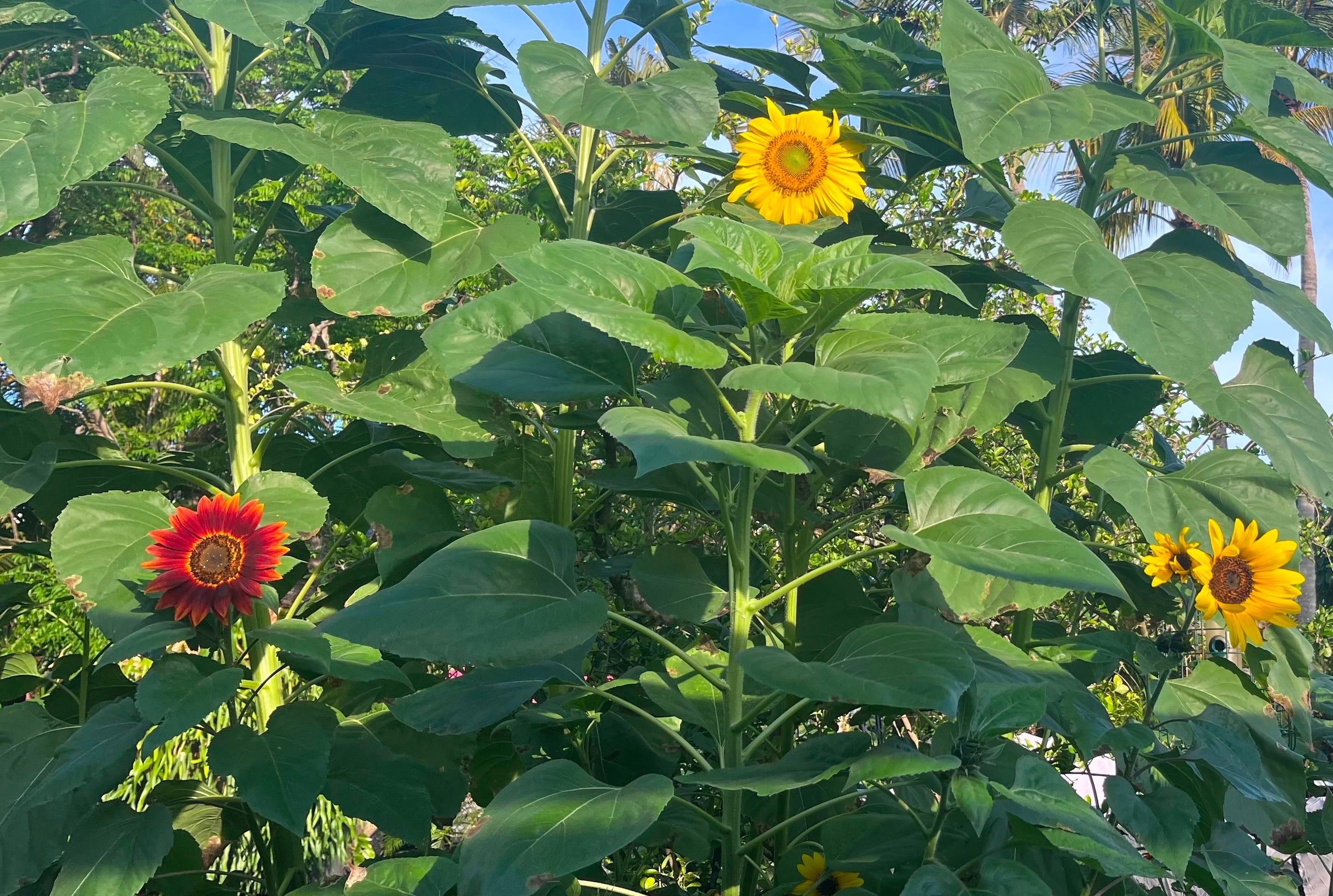
One of the most important lessons I’ve learned is to embrace the breakdown. Not because it’s comfortable. Not because it’s fun. But because resisting it only prolongs the suffering.
Today, through the lens of Inner Garden Work, I see these moments as growth seasons. Just as a garden experiences storms, droughts, and seasons where everything appears dormant, we experience periods of grief, anxiety, depression, heartbreak, and uncertainty. What looks like the end of something is often the beginning of something new.
The bigger the downward spiral, the bigger the growth spurt At least, that’s how it’s worked for me. That’s what I call the breakdowns to breakthroughs that come after I’ve done the work of feeling, integrating, healing, and growing.
Learning this skill didn’t prevent difficult seasons from happening. Life still delivers losses, disappointments, heartbreaks, and challenges. What changed was my understanding of them. I stopped seeing myself as broken. I started seeing myself as reclaiming my garden.
When a storm arrives now, I remind myself that it has come to teach me something. The lesson might take a day. It might take a month. Sometimes it takes much longer. In my experience, the length of the lesson often depends on how tightly I’m holding onto the problem. The first step is always the same. Feel the feelings. Don’t run, numb, avoid, or pretend I’m not having them.
When one of my Category 4 hurricanes rolls through, I let it move through me. I cry. I journal. I sit quietly. I allow myself to acknowledge what is happening instead of pretending it isn’t there.
Then I start asking questions:
· What fears are stirring up?
· What belief needs to be weeded out?
· What do I want to plant?
· What needs nurturing in my garden?
· What lesson am I being invited to learn?
I didn’t get to this place alone. My mom did her best to help me see that I was working myself up in my teen years. She gave me a seed—I just wasn’t ready to plant it yet.
In my early thirties, I was introduced to the work of Byron Katie. A friend gave me a CD series called Making Your Thoughts Work for You with Dr. Wayne Dyer and Byron Katie. While I had already done a great deal of personal growth, her approach gave me practical tools for examining the stories I was telling myself. Her work helped me understand something profound: Not every thought deserves a place in the garden. Some thoughts are flowers. Some thoughts are weeds. Learning to question my stressful thoughts became one of the most effective tools I’ve ever found for creating peace.
Another lesson came from my first sponsor in AL-ANON. She suggested I stand on a chair and look at a room from a different angle. Then she encouraged me to change the order of my daily routines. One day she told me to put the opposite foot into my underwear first. I had to leave myself a note in my underwear drawer. It sounds ridiculous, but it worked. The exercise wasn’t about underwear. It was about interrupting familiar patterns.
When we become trapped in our thoughts, we often become trapped in our habits as well. Sometimes the smallest change can help us see a situation differently.
I’m neurodivergent, so living in my head can sometimes be a little overwhelming. It’s important for me to have ways to break myself out stories that aren’t serving me. This is what I call feeding the weeds.
It’s one of the reasons I love hiking off trail. When I’m paying attention to roots, snakes, sticks, and direction, I become fully present. The constant chatter quiets down, and I reconnect with the moment I’m in. I also love deep cleaning. When I’m paying attention to the little details of what I’m doing my mind slows down, and I can start being present to moment. Then, I take a few minutes to breathe and be present in my body to see what I’m really feeling. I have quite a few tricks to help me get out of my story and be present with the feelings trying to pass through.
Over the years, I’ve worked with many people navigating their own growth seasons. While everyone’s story is unique, I’ve noticed a few things that tend to keep us stuck.
We try to run, numb, and avoid what we’re feeling. We can use busyness, relationships. alcohol, shopping, work, food, binging on TV, gaming, social media scrolling, there are endless distractions. We can even miss out on experiencing joy when we are doing this. I’ve certainly done my share of it all. The problem is that whatever we refuse to face usually follows us.
We may avoid tending a patch of weeds for a while, but eventually they spread and start stealing nutrients from our healthy plant life. I just did some physical weeding after I neglected to pay attention to the weeds with the pretty little flowers growing under one of our trees. It was such a powerful reminder of how important it is to keep up with regular gardening. When we don’t, chaos becomes familiar.
For years, I found myself in relationships filled with yelling, criticism, emotional unpredictability, and even narcissistic abuse. Looking back, I understand why. It felt familiar because it mirrored what I witnessed growing up. Familiar doesn’t always mean healthy.
It took years of conscious work to break that pattern. I studied healthy relationships. I surrounded myself with people who modeled what I wanted to learn. Growth requires us to plant something new where old patterns once grew. I had to be willing to get dirty and do the work.
· If there is shame involved, bring it into the light.
· If there is guilt involved, forgive myself.
· If there is anxiety involved, come back to the present moment.
· If there is anger involved, practice forgiveness.
Not because the other person deserves it. Because I deserve peace. I can’t control anyone else’s behavior, but I have a say in how I let it affect me. Healthy boundaries come naturally when we start taking care of our gardens.
One of the greatest gifts Inner Garden Work has given me is the understanding that every season passes. The storms, heartbreaks, confusion, darkness, challenging feelings, and circumstances all pass. So do the seasons I enjoy, that’s life.
Our lives have seasons, and they all have purpose.
Today, I can often move through difficult emotions more quickly than I could when I was seventeen. Not because life has become easier, but because I’ve learned how to tend my inner garden. I’ve learned how to:
· Recognize the weeds before they take over
· Care for myself when life feels overwhelming
· See breakdowns as invitations to breakthrough
· Treat myself from a loving place
If you’re standing in a dark season right now, please remember this:
Your garden is not broken. You are not broken. You may simply be in a season where the soil is being turned for your growth. Be gentle with yourself. Feel what needs to be felt. Trust what is being revealed. What feels like a breakdown may be the very thing preparing you for your next bloom. And all those tears are nurturing the soil.
The results I get from inner gardening make getting dirty and scraped up worth it!
Until next time, I hope you are able to find moments to align your energy with the love, abundance, and peace that you deserve.
With Love and Gratitude,
Rachael Wolff
If you are interested in getting a copy of Tending Your Inner Garden in paperback or audiobook, just press the button. If you do purchase a copy, make sure to let me know because I will send you a free PDF of the 35-Day Cultivating Seeds of Love, Abundance, and Peace Journal. You can see my journey using the journal in Substack Notes.